Pickleball Injuries: The Four We See Most (And How to Keep Playing)

Short answer
- Pickleball elbow, a tendon capacity problem, not inflammation. 6–12 weeks, and rest alone makes it come back.
- Achilles, tendinopathy responds to loading over 8–12 weeks. A sudden pop is a suspected rupture: same-day emergency care.
- Knees, usually a hip strength problem the knee is paying for.
- Shoulders, the overhead smash asking for range most desk-bound adults don't have.
- You don't have to stop playing. Drop frequency, cut the one provoking shot, and add strength twice a week.
Pickleball has a very specific injury profile, and it's got almost nothing to do with the sport being dangerous.
It's about who plays it. The player we see most is over 45, plays three to five times a week, picked it up in the last two years, and did exactly no preparation for it. High frequency, low preparation, tissue that's stiffened up a bit with age.
The sport is gentle. The dose is not.
1. Pickleball elbow
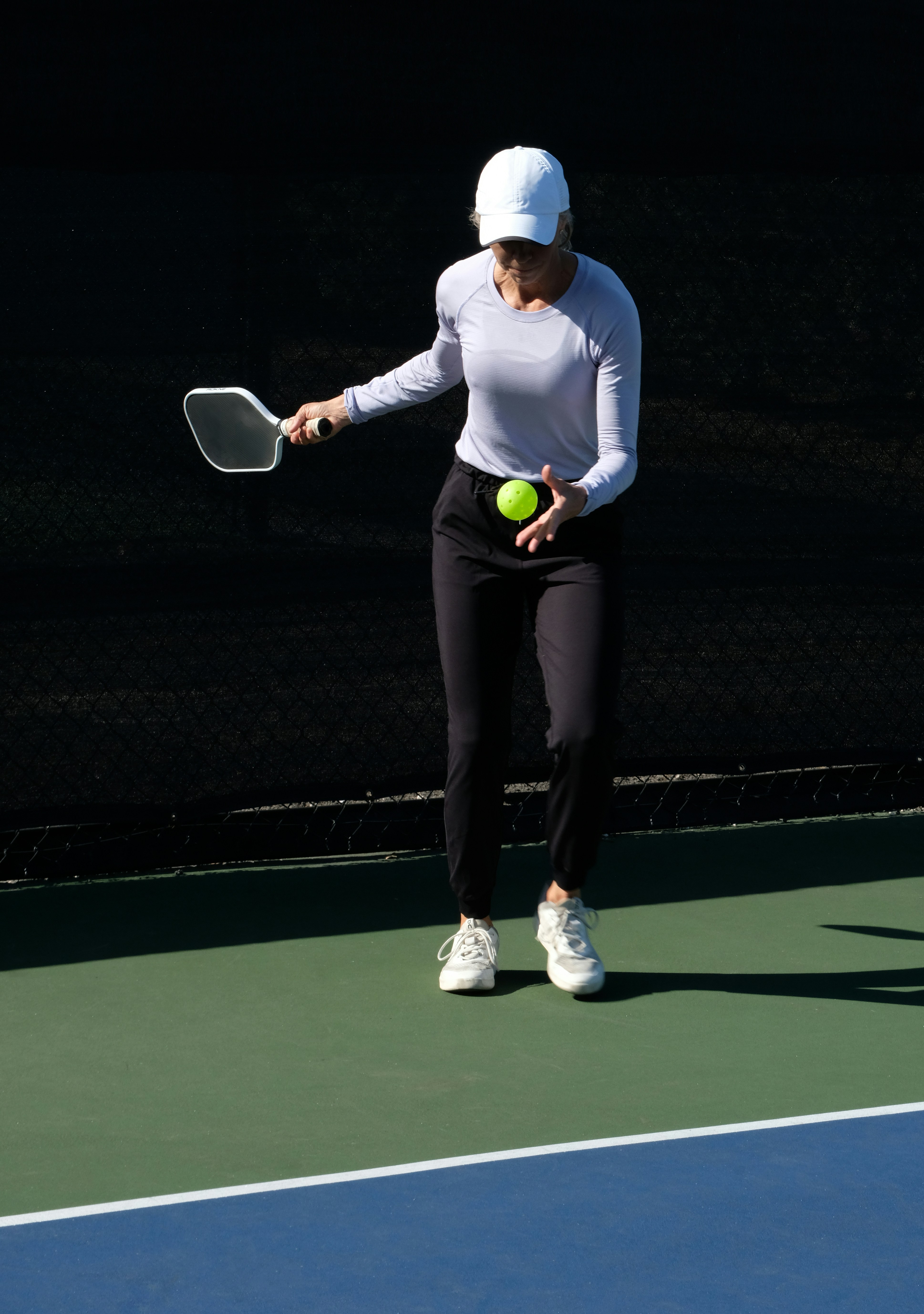
Where it comes from. The paddle's short and light, which sounds protective and isn't. A short handle means your wrist does work your shoulder would otherwise do. And the dink (that soft controlled shot at the net that basically is pickleball) is almost entirely wrist and forearm. Every dink asks the wrist extensors to stabilize a small, fast, repeated movement. Four hundred times a session. Five sessions a week.
Here's what almost everyone gets wrong. This isn't inflammation. Despite all the "-itis" names floating around, the tendon changes in persistent cases are degenerative: the tissue's been asked for more than it can give and has started to disorganize.
That matters enormously, because it means anti-inflammatories and rest treat the symptom, not the problem. Rest lowers the demand, which feels better. It also lowers capacity further. Which is exactly why it comes back the week you start playing again.
How it shows up. Pain on the outside of the elbow, sore to press on the bony point, worse gripping the paddle or opening a jar. Often worst first thing in the morning and after you play, rather than during.
What works. Progressive loading of the wrist extensors, isometric holds first if it's very angry, then slow heavy wrist extension. It isn't comfortable and it isn't fast. Six to twelve weeks is normal, and you measure progress by what you can grip, not by the pain being gone. Grip size and paddle weight matter too. A counterforce brace can take enough pain off to keep playing while you do the work.
2. Achilles, and the one you need to read
Read this bit first.
If you feel a sudden pop or snap at the back of your ankle (most people say it felt like being kicked in the calf) and you can't push off properly afterwards, treat that as a suspected Achilles rupture.
Go to emergency or urgent care the same day. Don't wait to see if it settles. Don't book physio first. Don't walk it off.
Ruptures happen in exactly this population, in exactly this sport: a middle-aged player lunging forward for a drop shot, or pushing back off the line. Outcomes depend on how fast it gets assessed.
Why the sport does this. The court's small, so you're not running. You're doing short explosive lunges to the kitchen line and backpedals to cover a lob, over and over. Backpedalling loads the Achilles fast while the ankle bends, and that's the mechanism.
Tendons get stiffer and less elastic with age. The ability to absorb a rapid stretch drops with it. The same movement a 25-year-old shrugs off is near the limit for a 55-year-old who hasn't loaded that tissue in two decades.
The gradual version. Tendinopathy builds over weeks: stiff in the morning, eases once you're warm, aches after playing, tender to squeeze a couple of centimetres above the heel. That version responds well to loading: calf raises progressed to heavy and slow, then faster work, over eight to twelve weeks.
3. Knees
The cause. Hard courts, constant side-to-side movement, split-steps, quick changes of direction. Knees handle that fine when the hip controls it. But if you sit for most of the day, glute strength and hip control are usually the limiting factor, and the knee ends up absorbing whatever the hip doesn't manage.
Two versions show up. Pain around or under the kneecap, worse on stairs and after sitting. Or pain on the inside of the joint line in players over 50, which is often degenerative meniscal or early arthritic change.
The reassuring part, said accurately. Degenerative changes show up on scans of loads of people over 50 who have no pain at all. And for degenerative meniscal tears, exercise-based rehab performs comparably to surgery in most cases. A scan finding isn't a verdict, and "wear and tear" isn't a reason to quit.
What to do about it. Proper strength work: quads and glutes, loaded, not band exercises. Court-appropriate footwear. And an honest look at how fast you ramped up your playing volume.
4. Shoulders
The mechanism. The overhead smash needs your arm up and rotated back, at speed. Most desk-based adults over 45 don't have that range available in a controlled way, so the movement gets borrowed from somewhere else, usually the shoulder blade tipping forward or the low back arching. Do it enough and the rotator cuff takes the load.
What you'll notice. Pain reaching overhead or behind your back, an ache down the outside of the upper arm, trouble sleeping on that side. Six to twelve weeks is typical. Weakness is the sign that needs assessment rather than patience.
What to do about it. Rotator cuff and shoulder blade strength, restoring the rotation the smash needs, and hitting fewer overheads for a while.
Why "rest it" is the wrong advice
Tendons stiffen with age and cope less well with rapid stretch. Recovery between sessions slows down. Muscle mass and the ability to produce force quickly decline from your forties unless you deliberately train them.
And almost nobody arriving at pickleball from a sedentary decade has trained any of that.
So the honest advice is the opposite of what people expect. Rest lowers the demand and lowers your capacity. The durable answer is raising capacity: strength training two or three times a week, loading the tissues the sport stresses: calves, quads, glutes, rotator cuff, wrist extensors.
That's the gap our performance training at Markham exists to fill, and for this age group it's more protective than any amount of stretching or bracing.
How to keep playing while it settles
You're not going to stop. So plan it properly instead.
- Drop the frequency, not the sport. Five sessions down to two or three, for three or four weeks. Usually enough to let an angry tendon settle while you load it.
- Cut the provoking shot, not the game. Fewer overheads for a sore shoulder. Fewer hard backpedals for an Achilles. You can play a full match without either.
- Warm up properly. Five to eight minutes: calf raises, lunges, arm circles into overhead reaches, a few gradual rallies. Most players in this bracket arrive and start hitting.
- Brace or tape tactically. A counterforce brace for the elbow, taping for the knee. These buy you enough comfort to keep loading. They aren't the treatment.
- Do the strength work on non-playing days. Two sessions a week changes your tissue capacity within about eight weeks.
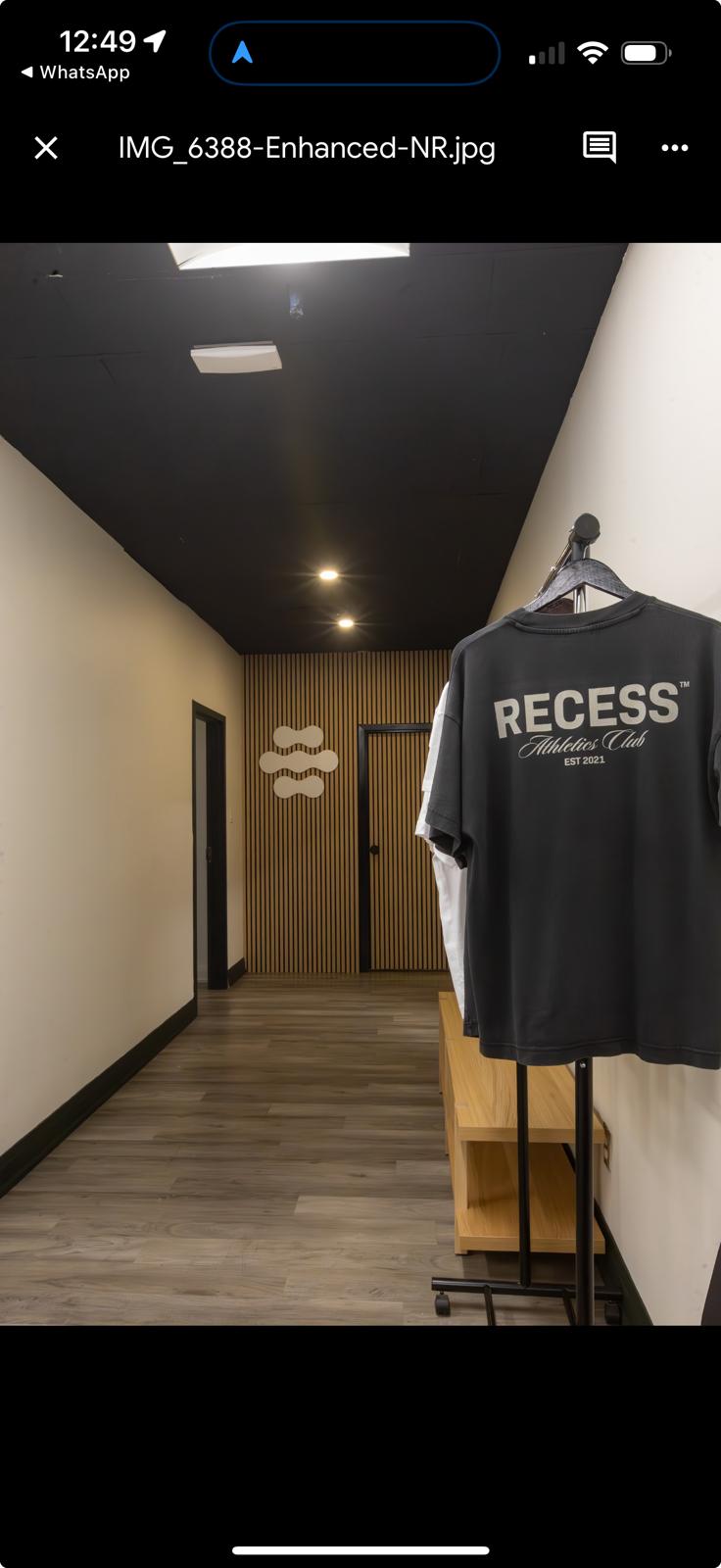
- Use recovery deliberately. Our Markham clinic sits inside Recess, so the cold plunge, sauna and recovery lounge are in the same building as the treatment rooms. One caveat: if you're lifting to build capacity, don't plunge straight after. The research shows cold immersion blunts the adaptation you're training for. Plunge after playing instead.
Massage therapy is useful for the soreness that piles up in a heavy playing week, and it pairs with the loading work rather than replacing it.
When to get assessed
Book if pain's lasted more than two weeks, is getting worse week over week, wakes you at night, or comes with weakness or a sense of giving way.
Get seen urgently for a sudden pop at the back of the ankle, inability to bear weight, or a knee that locks and won't straighten.
No referral needed to book physio in Ontario. Your insurer may want one before reimbursing. Their rule, not the law.
Book at Revibe Markham or call (905) 783-8423. Monday to Friday 9–7, Saturday 10–4. We're at 220 Torbay Rd, serving Markham, Richmond Hill, Vaughan, Stouffville and the wider GTA.
General information, not a diagnosis. Timelines are typical ranges and vary a lot between people. Last updated: September 2026
The thing nobody tells women who take up pickleball at 50
If you're a woman in your late forties or fifties and your tendons have started complaining without you doing anything different, this section is the most useful one on the page.
Up to 70% of women report musculoskeletal pain during the menopause transition. Achilles, gluteal and rotator cuff tendinopathy all become more common, and often turn up without a clear injury behind them. Frozen shoulder is roughly twice as common in women, and oestrogen withdrawal during perimenopause is increasingly thought to be a risk factor.
The proposed mechanism is straightforward enough: oestrogen supports collagen synthesis, tendon elasticity and healing capacity. As it declines, tendons get less tolerant of load and slower to repair.
Look at the four injuries in this article. Three of them are Achilles, shoulder and a knee that isn't recovering. If those arrived around the same time your cycle changed, that is not a coincidence and it is not you getting old and needing to accept it.
What it changes practically. It doesn't change the treatment much (loading is still the answer), but it changes the timeline you should expect and it raises the value of the surrounding factors: enough protein to support muscle and collagen, vitamin D status, sleep, and a conversation about whether hormonal management is appropriate for you. That conversation belongs with your GP or a naturopathic doctor. Naturopathic medicine is regulated in Ontario by the College of Naturopaths of Ontario, with NDs able to draw blood for certain tests. Dr. Jennifer Tang works in hormone and gut health and sees a lot of this. You can read more about naturopathic medicine here.
I'm a physiotherapist, so I'll say the limit plainly: I can load your tendon properly and I can't do anything about your hormones. If both are in play you want both addressed, and pretending otherwise wastes your time.
Frequently Asked Questions
Pain at the outer elbow from repeated loading of the wrist extensors, mostly through dinking. In persistent cases the tendon change is degenerative rather than inflammatory, so progressive strength work matters more than rest or anti-inflammatories. Six to twelve weeks is a typical timeline.
Usually yes, with modifications. Dropping from five sessions to two or three, avoiding the specific provoking shot, warming up properly and using a brace tactically lets most players continue while the tissue settles. Sudden ankle pops, inability to bear weight and a locking knee are exceptions needing urgent assessment.
A sudden pop or snap at the back of the ankle, often described as feeling like being kicked in the calf, followed by difficulty pushing off or walking normally. This needs same-day emergency assessment, not physiotherapy. Ruptures occur in exactly this age group and sport.
The sport is gentle but the dose isn't. Tendons stiffen and cope less well with rapid stretch as we age, recovery between sessions slows, and most new players go from sedentary to five sessions a week with no strength preparation. The gap between demand and capacity causes the injury.
Rest reduces demand on the tissue but also reduces its capacity, which is why symptoms usually return in the first week back. For most pickleball injuries the durable approach is reduced playing volume combined with progressive strength loading, two or three times a week.
No. You can book physiotherapy directly in Ontario. Your insurance plan may separately require a referral before reimbursing you, which is an insurer requirement rather than a legal one. Check your plan wording or call the clinic for help.
Sources
- Frontiers in Sports and Active Living (2021), cold water immersion and training adaptation. doi:10.3389/fspor.2021.660291
- Coldture and Plunge manufacturer guidance; Cold Water Safety on the cold shock response.
- College of Physiotherapists of Ontario, regulatory status and direct access.