Lower Back Pain: When It's Muscular, When It's Your Disc, and When to Get It Looked At

Short answer
- Muscular pain is diffuse, moves around, worse after sitting or standing a while, better with movement, no symptoms below the knee.
- Disc-related pain is more specific, worse with sitting, bending, coughing, and often sends pain past the knee with pins and needles or numbness.
- Buttock ache is usually referred pain, not sciatica. True sciatica goes below the knee.
- Emergency: numbness in the saddle area, bladder or bowel changes, or weakness in both legs. Go to hospital now.
- Most episodes improve over a few weeks. Staying active beats bed rest. Imaging usually isn't needed.
September's always busy for back pain. Summer ends, people go back to eight hours at a desk after three months of moving around more, and about two weeks later the back objects.
And almost everyone arrives with the same question, usually unspoken: is this serious? Most have already decided it's a disc.
So let's answer it properly.
Most back pain isn't damage
This needs saying carefully, because both over-reassuring you and frightening you cause harm.
The large majority of low back pain is what we call non-specific, no single structure can confidently be blamed, and nothing serious is going on. That's not a diagnostic failure. The low back is a densely nerve-supplied area where several structures produce overlapping symptoms.
Two things worth holding onto:
- Scan findings correlate poorly with pain. Disc bulges, degenerative change and even herniations turn up regularly in people with no back pain at all, and get more common with age in everyone. A finding on a report isn't automatically your explanation.
- The natural course is broadly good. Most episodes improve substantially over weeks, particularly if you keep moving.
What that doesn't mean is that your pain is imaginary or that nothing should be done. Recurrence is common, and how you handle the first few weeks affects it.
What muscular back pain usually feels like
- Diffuse, not pinpoint. Hard to point at with one finger. Usually described as a band or a region.
- It moves. Slightly different spot or side day to day.
- Worse after holding a position. Long sitting, long standing, driving, a day in the garden.
- Better once you're moving. Stiff and sore waking up, eases as you get going.
- Nothing below the knee. Some spread into the buttock or upper thigh is normal and doesn't mean nerve trouble.
- Often no clear cause. People expect a dramatic moment. Frequently there isn't one, it was reaching for the kettle.
This is by far the most common presentation.
What disc and nerve pain usually feels like
More specific, often more intense, sometimes with a clear onset.
- Worse sitting, bending forward, coughing or sneezing, all of which raise pressure through the disc.
- Symptoms below the knee. This is the meaningful one. Pain down the back or side of the leg past the knee, often into the calf or foot.
- Pins and needles, numbness or weakness in a pattern, a strip of altered sensation, or trouble pushing off your foot or lifting your toes.
- Usually one-sided.
Even here it's better news than most people assume. Most lumbar disc herniations improve without surgery over weeks to a few months, and the herniated material commonly shrinks on its own. Surgery is generally considered for persistent, disabling symptoms that haven't responded, or significant progressive weakness.
Is buttock pain sciatica?
Usually not, and the loose use of "sciatica" causes a lot of unnecessary alarm.
True radicular pain, actual nerve root irritation, typically travels below the knee, follows a recognizable band, and often comes with altered sensation, reduced reflexes or weakness. It tends to feel sharp, electric or burning.
Referred pain is felt away from its source without nerve compression. The joints, discs and muscles of the low back all refer into the buttock and upper thigh. It's duller, more diffuse, rarely goes past the knee, and comes without numbness or weakness.
So buttock and upper-thigh ache is usually referred pain. Common, less concerning, and it typically settles faster.
Red flags: hospital, not physio
Most back pain isn't sinister. A small number of presentations are, and they need medical assessment rather than a manual therapy appointment.
Go to an emergency department now if you have:
- Numbness in the saddle area, inner thighs, buttocks, genitals
- New difficulty controlling your bladder or bowel, or you can't pass urine
- Progressive or both-sided leg weakness
Together these can point to cauda equina syndrome, compression of the nerve roots at the base of the spinal cord. It's rare and it's a surgical emergency where delay affects the outcome. Don't wait for a clinic appointment.
Arrange medical assessment promptly for:
- Unexplained weight loss, night sweats, or fever with back pain
- A history of cancer with new back pain
- Significant trauma, or any fall if you have osteoporosis
- Pain that's constant, getting worse, and clearly worse at night or at rest
- A first significant episode under 20 or over 50
- Long-term steroid use, immunosuppression or IV drug use with new back pain
Mention any of these when you phone and we'll point you the right way rather than booking you in.
What helps
Keep moving. Bed rest was standard advice for decades and it turned out to make things worse. Staying as active as pain reasonably allows is one of the best-supported recommendations in the field. It doesn't have to be exercise, walking counts.
Load it gradually. Tissue tolerance is built by graded exposure. You return to bending, lifting and sitting deliberately and in steps, rather than avoiding them until the pain vanishes.
About "core strengthening." The phrase is oversold. There's no strong evidence that one specific muscle or one magic exercise fixes back pain. General strength, endurance and confident movement is what helps.
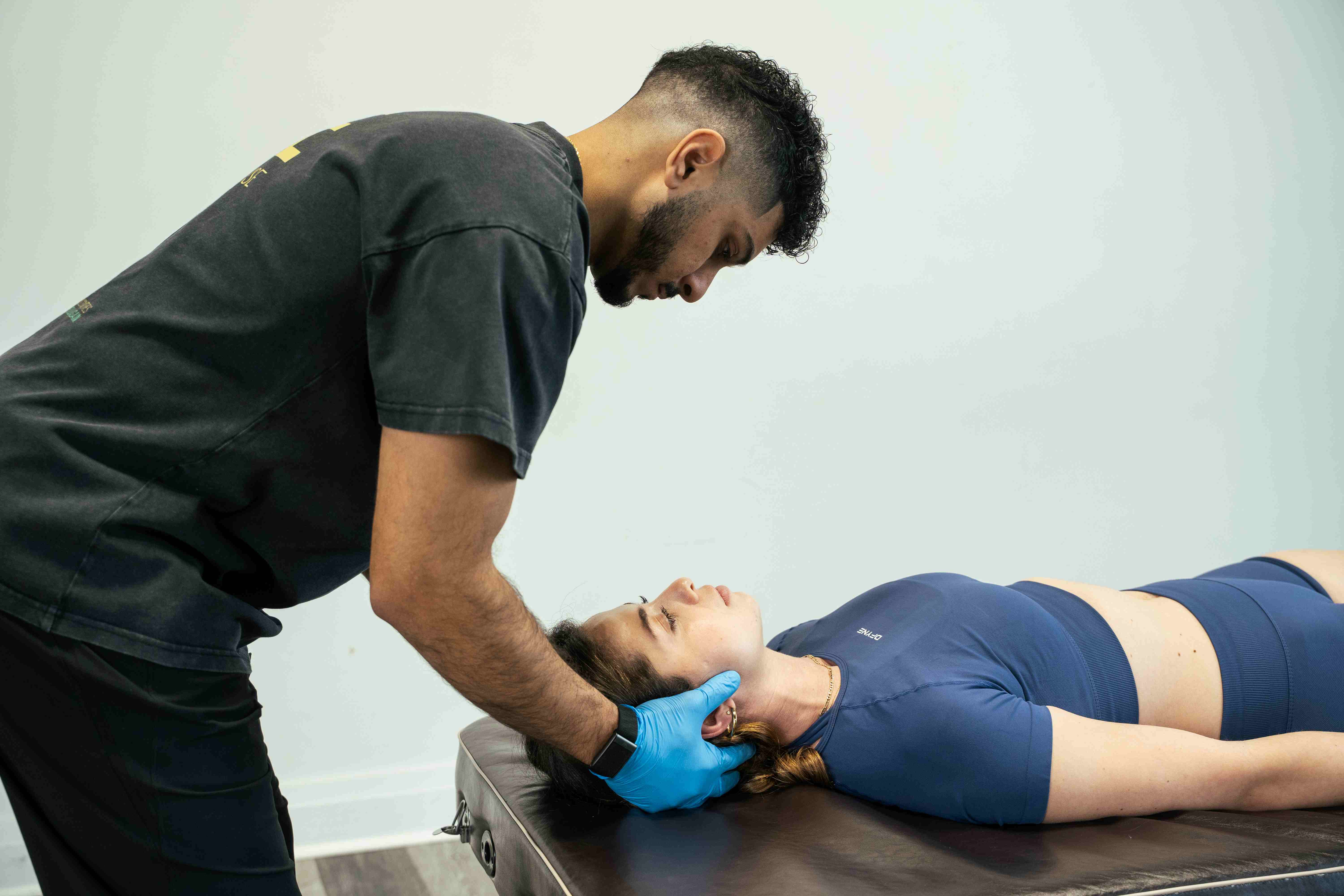
Manual therapy has a real but defined role. Hands-on treatment can reduce pain and stiffness short-term, and that's valuable because it makes movement tolerable, and movement is what drives recovery. It's the thing that gets you moving, not the thing that fixes you. Same goes for massage therapy: useful for symptom relief, best paired with active rehab rather than used instead of it.
Sleep and stress matter more than people expect. Poor sleep and high stress reliably amplify pain. If your back flared the same fortnight your workload doubled, that is clinical information and not a coincidence.
What an assessment looks like here
At our Mississauga clinic on Dixie Road, a first appointment for low back pain means screening the red flags above, a neurological check if there are leg symptoms, assessing how you move, and working out what provokes it and what settles it.
You should leave with an explanation in plain language, a plan, and two or three things to do. Not just a treatment and a rebooking.
You probably don't need a scan. For most back pain without red flags, imaging doesn't change what we do and can make outcomes worse by turning up incidental findings that frighten people. If we think you need imaging or a medical opinion, we'll say so and help you get it.
No doctor's referral needed to book. Your insurance plan might want one before reimbursing, insurer rule, not law. We direct bill many major insurers where the plan covers it.
Book at Revibe Mississauga or call (905) 783-8423. Monday to Friday 9–7, Saturday 10–4.
General information, not a diagnosis. Timelines are typical ranges. If you have any red flag symptoms above, seek medical assessment rather than booking physiotherapy. Last updated: September 2026
The two things that make back pain worse that aren't your back
Poor sleep amplifies pain, not metaphorically. It lowers pain thresholds, and a back that would have settled in a fortnight can stay sore for months in someone sleeping five broken hours. Stress does something similar through sustained muscular guarding and a nervous system that stays switched on.
If either of those is your situation, more physiotherapy is not the answer to the part of the problem that isn't physiotherapy.
Naturopathic medicine is regulated in Ontario by the College of Naturopaths of Ontario, and sleep, stress and the systemic contributors sit squarely in that scope. NDs can also order certain blood work. Our naturopathic doctors are Dr. Jennifer Tang and Lisbeth Bitar Patino.
One pattern worth flagging: if your back is stiff for well over half an hour every morning, improves with movement rather than rest, wakes you in the second half of the night, and started before you were 45, that combination points toward inflammatory back pain rather than mechanical back pain. It needs a medical workup, not a treatment plan from me. Mention it and we will point you the right way.
Work out what's driving it
The CareMap takes seven questions and under two minutes. It scores you on Readiness, Recovery, Activity, Capacity, Health and Mindset, gives you the top three as a PDF, and matches you to what would help. A clinician reviews it before you're seen.
For back pain it's genuinely useful, because it separates the people whose problem is loading capacity from the people whose problem is sleep, stress and load in life rather than load in the gym. Those two need different plans.
Frequently Asked Questions
Disc-related pain is often worse with sitting, bending, coughing or sneezing, and typically sends symptoms below the knee, sometimes with pins and needles, numbness or weakness in a defined pattern. Muscular pain tends to be more diffuse, moves around, eases with movement, and stays above the knee.
Usually not. Buttock and upper-thigh ache is most often referred pain from the joints, discs or muscles of the low back, without nerve compression. True sciatica typically travels below the knee in a recognizable band and often comes with numbness, altered sensation or weakness.
Go to an emergency department immediately for numbness in the saddle area, new difficulty controlling your bladder or bowel, inability to pass urine, or progressive weakness in both legs. Together these may indicate cauda equina syndrome, a rare surgical emergency where delay affects the outcome.
Most episodes of non-specific low back pain improve substantially over a few weeks, particularly if you stay active rather than resting. Recurrence is common, which is why the aim isn't just settling this episode but building tolerance so the next one is shorter and milder.
Usually not. Without red flag symptoms, imaging rarely changes management and can worsen outcomes by revealing incidental findings such as disc bulges and degenerative change that are common in people with no pain at all. Imaging is indicated where red flags are present or symptoms aren't responding.
Massage therapy can reduce pain and muscular guarding short-term, which makes it easier to move and stay active. It works best alongside active rehabilitation rather than as a replacement, since graded movement and loading drive longer-term improvement.
Sources
- College of Physiotherapists of Ontario, direct access to physiotherapy.
- Revibe direct billing page, insurer list and coverage conditions.