Hockey Tryout Season: The Four Injuries We See Every September

Short answer
- Groin (adductor) strain is the most common. Mild: 1–3 weeks. Moderate: 4–8 weeks.
- Hip flexor and impingement-type pain, 2–6 weeks for muscle, 6–12 for joint.
- Low back pain from the skating posture, 2–6 weeks, and rest makes it worse.
- Shoulder and AC joint from contact, grade 1: 1–3 weeks, grade 2: 3–6 weeks.
- The cause is almost always the same: a quiet summer, then five hard skates a week with no ramp-up.
- No doctor's referral needed to book physio in Ontario.
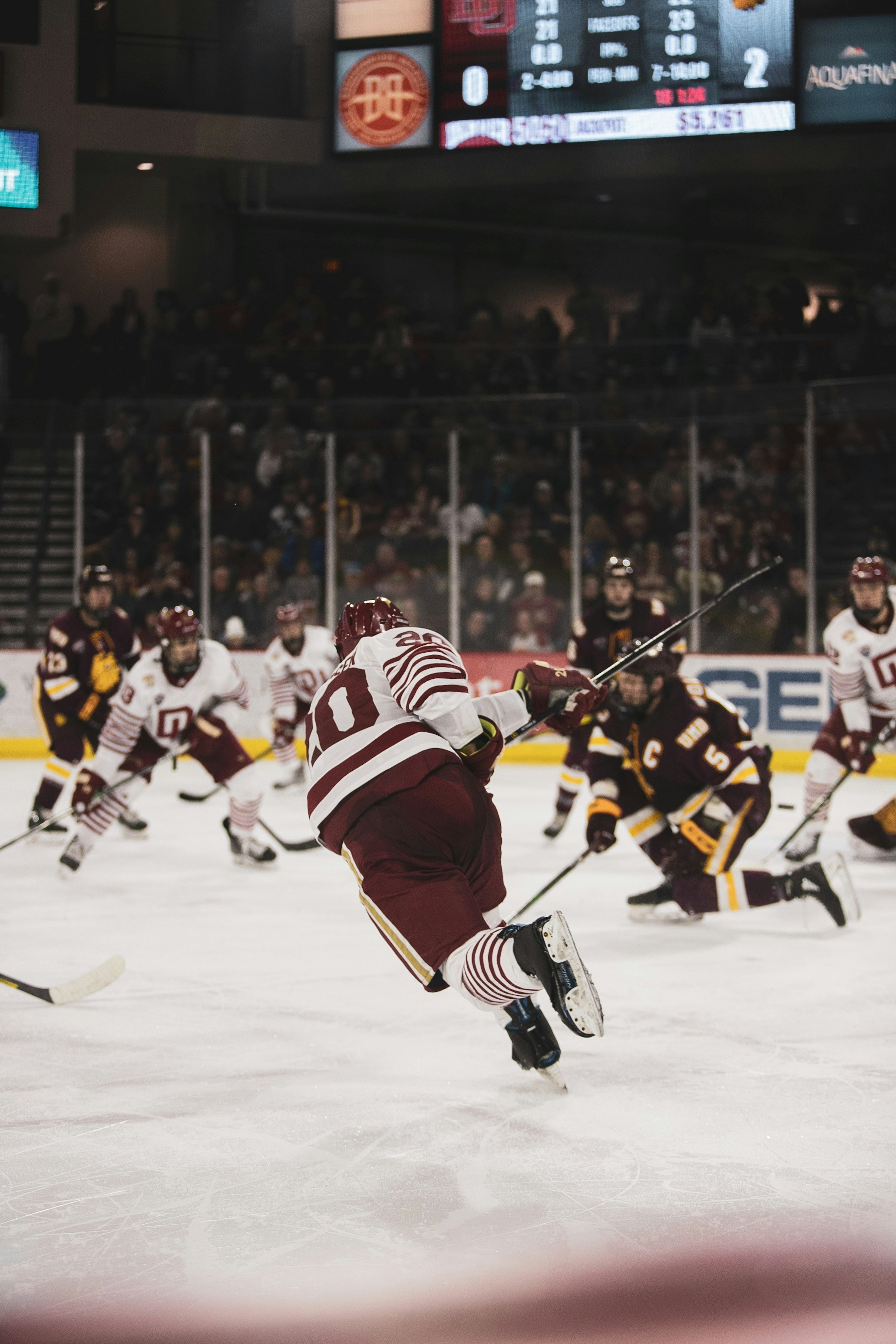
Tryouts run from late August into the first weeks of September, which means your kid goes from two or three skates a month all summer to five or six flat-out sessions a week, with a roster spot riding on it.
You could set a calendar by what walks through our door afterwards.
Same four injuries. Every single year. And three of them trace back to the same cause, which is the useful bit, because it means most of this is preventable if you know what's coming.
1. Groin strain, the one we see most
The mechanism. A skating stride isn't a running stride. To push, the hip opens out and back so the blade drives against the ice. That's the easy half. Then the leg has to be stopped at the end of its range and dragged back under the body to go again, and that's the adductors, working while lengthening, at the very edge of their range. Every single stride.
Lengthening under load at end range is the riskiest thing you can ask a muscle to do. It's fine when the tissue has capacity. A quiet summer takes that capacity away, and tryout week asks for all of it back at once.
How it shows up. Usually there's a moment: a crossover, a hard first step, a stretch for the puck. Then a sharp pull high on the inner thigh. Squeezing the knees together hurts. Bruising sometimes shows up two or three days later.
How long. Mild strains: one to three weeks. Moderate: four to eight. But recurrence is the real problem, and it happens because players come back when it feels fine rather than when the strength tests equal to the other side.
What to do now, before it happens. Copenhagen planks twice a week, adductor squeeze isometrics, and two or three proper skates before the first tryout. That's it. It closes most of the gap.
If it's already happened, a sports physiotherapy assessment includes side-to-side strength testing, so returning to play becomes a number, not a feeling.
2. Hip flexor strain and pinching at the front of the hip
What causes it. Pulling the leg back under the body is hip flexor work (iliopsoas and rectus femoris), and rectus femoris crosses the knee too, so it's working two joints at once. Meanwhile the skating posture holds the hip bent for the entire shift, so those muscles are producing force from a shortened position for an hour straight.
There's a joint version too. With the hip bent and turned in at end range, the front of the femur can make contact with the rim of the socket. That's impingement-type pain, and hockey lives in exactly that position.
What it feels like, and how long. Deep ache at the front of the hip or groin, a pinch at the bottom of a squat, worse after long shifts. Muscle strain: two to six weeks. Joint-related pain: usually six to twelve weeks of strength work and load management, with imaging only if it isn't responding.
At home: load the hip flexors, don't just stretch them. Straight-leg raises, march holds, couch stretch, glute bridges.
3. Low back pain from the skating posture
Why the stride does this. Skating is a sustained forward lean. Your back muscles hold that position for the whole shift with nowhere to rest, while your hips stay bent. Then add rotation that only ever goes one way: every shot, every pass, same side.
The limiting factor isn't back strength. It's back endurance. And endurance is the first thing to disappear over a summer off.
Symptoms and timeline. A dull band across the low back after games, stiff in the mornings, worse on back-to-back skates. Most mechanical back pain improves within two to six weeks, as long as the player keeps moving. Rest makes it take longer.
One thing to watch. Pain travelling below the knee, or pins and needles, or weakness is different, and needs looking at sooner. And in a growing athlete, well-localized pain that's clearly worse bending backwards needs assessment, not a stretching routine.
At home: five to eight minutes a day of the McGill big three: modified curl-up, side bridge, bird dog.
4. Shoulder and AC joint from the boards
Why tryouts specifically. More contact, against unfamiliar teammates, with less controlled body position. Two mechanisms do most of it: landing on the point of the shoulder, which sprains the AC joint (a "separated shoulder"), or falling on an outstretched arm forced back and out.
How it presents. AC injuries hurt right on top of the shoulder, on the bump. Reaching across the body hurts. In a bigger sprain you can see a step in the shoulder's outline. Grade 1 is often one to three weeks, grade 2 three to six; worse than that sometimes needs a surgical opinion.
A first-time dislocation in a teenager has a high chance of happening again and should be properly assessed before any return to contact.
At home: rotator cuff, shoulder blade and neck strength twice a week changes what a hit costs you.
When to get it looked at, and when to wait
Waiting a few days is fine if: it's sore on both sides, there was no specific moment, no swelling or bruising, movement is full, and it's easing day by day.
Book an assessment if:
- There was a distinct moment and immediate pain
- They couldn't finish the session
- A limp is still there after 48 hours
- There's swelling, bruising or pain at night
- Pain travels below the knee with pins and needles
- Groin pain is getting worse across a week
Go to emergency for: obvious deformity, inability to bear weight, or any sign of a head injury.
You don't need a doctor's referral to book physio in Ontario. Your plan might want one before reimbursing you. Insurer rule, not a law.
Getting through the season
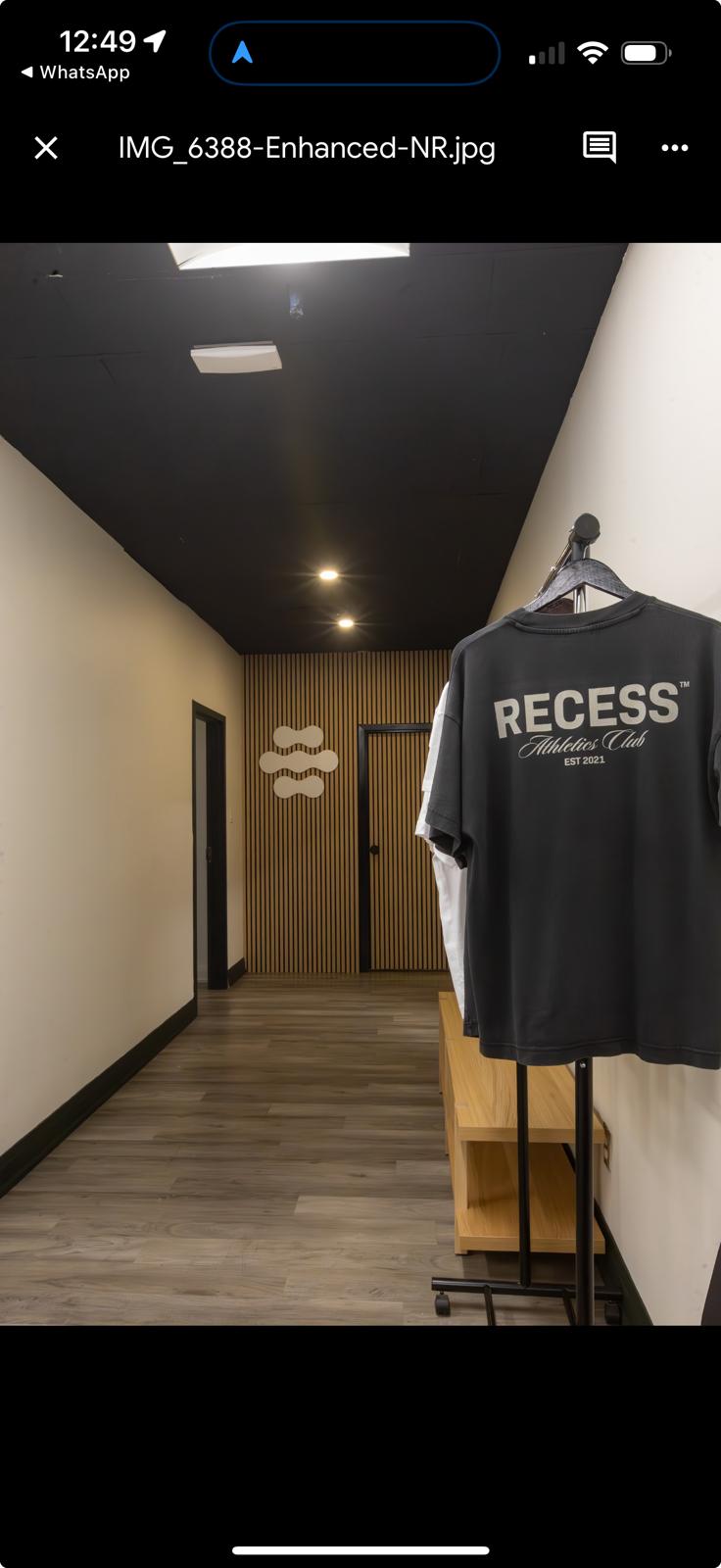
Our Markham clinic is inside Recess at 220 Torbay Rd, so recovery is in the same building as the treatment rooms. For a kid carrying three games and two practices a week, the cold plunge, sauna and recovery lounge are useful, and massage therapy helps manage the load that piles up.
One honest caveat, and it goes against us: don't plunge straight after a gym session. A 2021 review in Frontiers in Sports and Active Living found post-exercise cold water immersion blunts the strength gains that session was meant to produce, roughly −0.50 on dynamic 1-RM and −0.65 on isometric strength, with reduced growth in fast-twitch fibres. Endurance training wasn't affected.
So: plunge after games and hard conditioning. Leave several hours after lifting. Our tubs run at 3–4°C, which is colder than most research protocols, so sessions are short: thirty seconds to three minutes, never alone. Anyone with a heart condition or high blood pressure needs to speak to a doctor first.
These are typical ranges, not a diagnosis. Every injury here has a version that settles on its own and a version that doesn't.
Book at Revibe Markham or call (905) 783-8423. Monday to Friday 9–7, Saturday 10–4.
Last updated: September 2026
The part that isn't physiotherapy
There's a version of the September slump that has nothing to do with the skating stride, and it's worth checking before you assume everything is mechanical.
Adolescent athletes go into a hard season underfuelled more often than people realise. Growth, training volume and school schedules collide, and appetite doesn't always keep pace. Iron is the one that gets missed most, particularly in menstruating athletes, where low iron can present as fatigue, poor recovery between shifts and a season that feels harder than it should. It's a blood test, not a guess.
Naturopathic medicine is regulated in Ontario by the College of Naturopaths of Ontario, and NDs can draw blood for certain tests. So if your kid is skating well but tiring badly, sleeping poorly, or not bouncing back between games in a way that doesn't match their fitness, that's a legitimate thing to have looked at rather than trained through. Dr. Jennifer Tang and Lisbeth Bitar Patino are our naturopathic doctors.
Not every tired teenager needs a lab panel. But a tired teenager who has stopped improving is worth a conversation.
Frequently Asked Questions
Mild adductor strains usually settle in one to three weeks; moderate strains more often take four to eight. These are typical ranges, not a diagnosis. The bigger risk is recurrence. Players return because it feels fine, rather than because adduction strength tests equal to the other side.
No. Physiotherapy is regulated by the College of Physiotherapists of Ontario and you can book directly. Your insurance plan may still require a referral before reimbursing you, which is an insurer rule rather than a legal one. Check your plan wording.
Players go from a low-volume summer straight into maximum-intensity skating with no ramp-up. Tissue capacity drops over the off-season while tryout week demands full effort for sixty minutes at a time. That gap between capacity and demand causes the same four injuries every September.
Build adductor capacity before the volume spikes. Copenhagen planks twice a week starting from the knee-supported version, plus adductor squeeze isometrics, plus two or three proper skates before the first tryout. The aim is closing the gap between summer conditioning and tryout intensity.
Book an assessment if there was a distinct moment with immediate pain, they couldn't finish the session, a limp persists past 48 hours, there's swelling, bruising or night pain, or pain travels below the knee with pins and needles. Obvious deformity needs emergency care.
After games, tournaments and hard conditioning, yes, it helps players feel recovered. After strength training it appears to blunt adaptation, with meta-analytic estimates around −0.50 on dynamic 1-RM strength. Leave several hours between lifting and plunging, or plunge on non-lifting days.
Sources
- Frontiers in Sports and Active Living (2021), cold water immersion and training adaptation. doi:10.3389/fspor.2021.660291
- Journal of Applied Physiology (2019), cold water immersion and resistance-training adaptation. doi:10.1152/japplphysiol.00127.2019
- Coldture and Plunge manufacturer guidance; Cold Water Safety on the cold shock response.
- College of Physiotherapists of Ontario, regulatory status.