

Care Map results
Your 3 focus areas
Recommended tools
Your main concern or goal
Ready to get started?
- Mississauga: (289) 806-5123
- Markham: (905) 783-8423
- revibeto.com
Follow us
- Instagram: @timetorevibe
- Facebook: Revibe
- LinkedIn: Revibe
WSIB-Approved Chiropractic Care for Work-Related Injuries
Workers experiencing pain from job-related incidents receive chiropractic treatment at Revibe Mississauga. The clinic treats back pain, neck injuries, and repetitive strain conditions stemming from workplace activities. Chiropractors assess spinal alignment, joint function, and movement patterns to identify areas affected by workplace injuries. Treatment applies spinal adjustments, soft tissue therapy, and rehabilitation exercises based on the patient's specific injury and work requirements.
Revibe accepts WSIB claims for workplace injury treatment. Workers submit their claim information during the initial assessment. The clinic coordinates directly with WSIB for approved treatments and handles documentation requirements throughout the recovery process. Workers compensation coverage eliminates out-of-pocket costs for employees with approved claims.
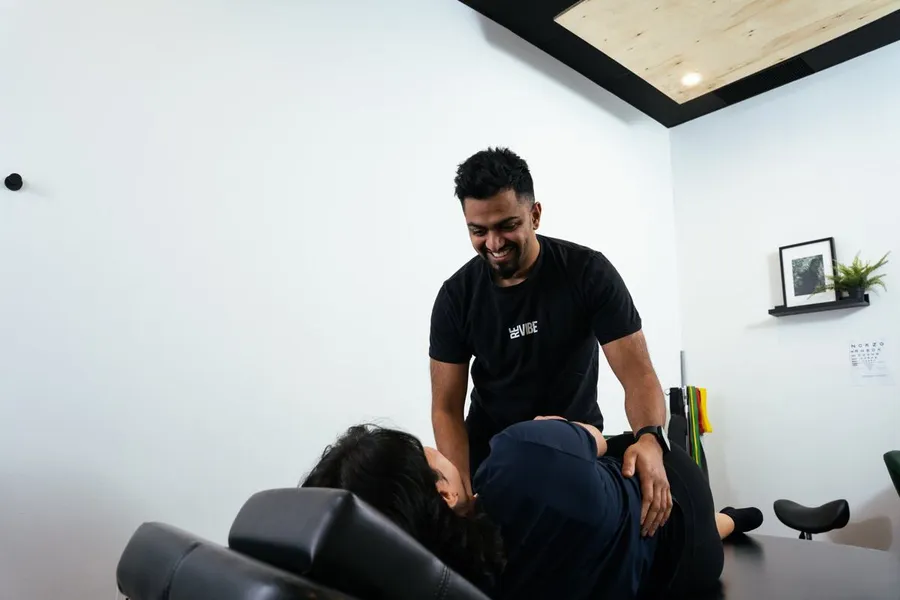
Manual adjustments restore spinal alignment and reduce nerve irritation in the cervical, thoracic, and lumbar regions. Soft tissue therapy addresses muscle tension in the neck, shoulders, and lower back. Each treatment plan responds to the individual's occupational injury presentation and physical job demands.
Treatment frequency depends on injury severity, symptom duration, and patient response to initial care. Acute workplace injuries from recent incidents require different scheduling than conditions developed over months. Recent injuries respond to more frequent initial intervention, typically two to three sessions per week for the first two weeks.
Documentation submitted to WSIB follows standardized reporting protocols required by the Workplace Safety and Insurance Board. Treatment reports track progress, functional improvements, and return-to-work readiness. Employees injured in work accidents anywhere in the Greater Toronto Area, including Brampton, Etobicoke, and surrounding regions, access WSIB-covered chiropractic services at the Dixie Road location near Highway 401 and Burnhamthorpe Road.
Revibe offers direct billing for chiropractic services through extended health benefits. Patients provide insurance information at their first appointment. The clinic submits claims directly to insurance providers, eliminating the reimbursement process for patients with participating insurance plans. Many employee benefit packages provide chiropractic coverage as part of paramedical services.
Our chiropractors at Revibe address a wide range of work-related injuries affecting the spine, joints, and musculoskeletal system across various occupational settings.
Prolonged sitting and repetitive computer use create neck pain, upper back tension, and carpal tunnel syndrome. Forward head posture places additional strain on cervical structures, creating tension in the suboccipital muscles and upper trapezius. Thoracic outlet syndrome develops when prolonged arm positioning at keyboards compresses neurovascular structures. Wrist extension during typing creates strain on the flexor and extensor tendons of the forearm.
Common scenarios Data entry personnel, administrative staff, remote workers using home office setups lacking proper ergonomic configuration, corporate office workers along Hurontario Street and Airport Road.
Warehouse workers, construction professionals, and manufacturing employees experience lower back strains from heavy lifting and repetitive bending. Improper lifting technique loads the lumbar spine instead of engaging leg muscles, creating excessive compressive forces on the L4-L5 and L5-S1 disc levels. Rotational strain occurs when workers twist while lifting, combining compressive and shear forces on spinal structures. Overhead work in construction trades creates shoulder impingement and rotator cuff strain.
Common scenarios Industrial sector workers along Derry Road, Matheson Boulevard, and the Airport Corporate Centre, manufacturing facilities, distribution centers, construction sites, flooring installers and tradespeople.
Identical movements performed throughout shifts without variation create muscle imbalances, tendon inflammation, and reduced range of motion. Assembly line workers, cashiers, and warehouse packers develop repetitive strain in the wrists, elbows, and shoulders. Tendinopathy develops when repetitive loading exceeds tissue capacity for repair. Inflammation in tendon sheaths creates adhesions that restrict normal gliding motion.
Common scenarios Grocery store workers, retail staff at Square One Shopping Centre, food service employees performing repetitive tasks, scanning items, reaching for products, and sustained standing positions.
Chiropractors apply multiple treatment approaches based on workplace injury type and individual patient needs:
Controlled force applied to specific vertebrae corrects misalignments in the cervical, thoracic, or lumbar spine. This restores joint mechanics and reduces pressure on compressed nerves. Chiropractors use diversified technique, activator methods, or drop-table adjustments based on patient comfort and injury location. Cervical adjustments address restricted motion in C1-C2, C4-C5, and C6-C7 segments commonly affected by desk work. Lumbar adjustments focus on L4-L5 and L5-S1 levels where lifting injuries concentrate stress.
Tension in muscles, fascia, and tendons surrounding injured areas releases through myofascial release, trigger point therapy, and instrument-assisted soft tissue mobilization. The trapezius, levator scapulae, and erector spinae respond to targeted soft tissue work, reducing inflammation and improving blood flow to injured tissues. Active release technique combines movement with sustained pressure to restore proper tissue length and function.
Strengthening weakened muscles and restoring mobility occurs through exercise protocols that progress from basic range of motion to functional movement patterns. Core strengthening stabilizes the lumbar spine for workers who lift heavy objects. Neck and shoulder exercises address postural weakness in desk workers. Dynamic exercises progress patients toward functional movement patterns required for job tasks. Proprioceptive training restores balance and coordination affected by injury.
Chiropractors evaluate workstation setup and provide recommendations to reduce strain. Modifications address monitor height, chair positioning, keyboard placement, and standing desk integration. Manual laborers receive body mechanics training for lifting technique, learning neutral spine positioning and leg drive methods to protect the lower back during physical tasks. Proper lifting technique engages gluteal and quadriceps muscles rather than spinal erectors.
Recent injuries from workplace accidents or sudden strain receive immediate assessment. Patients with acute lower back strain receive spinal adjustments to restore alignment and reduce muscle guarding, complemented by ice therapy and activity modification during the inflammatory phase. Acute injuries typically occurred within the past two weeks. Early intervention addresses joint restrictions before compensatory movement patterns develop.
Ice application for 15-20 minutes reduces local inflammation in the first 48-72 hours following injury. Activity modification allows tissue healing while maintaining movement within pain-free ranges. Acute phase treatment focuses on pain reduction and restoring basic function.
Conditions existing for months or years before patients seek treatment involve tissue changes, movement compensations, and sensitized pain pathways. Chronic neck pain from years of desk work requires sustained treatment to address tissue restrictions and postural patterns. Long-standing conditions require tissue remodeling through progressive loading. Treatment progresses from pain management to mobility restoration, then strength development, and finally functional integration.
Chronic injury treatment extends over months rather than weeks. Realistic expectations prevent patient frustration when rapid improvement does not occur. Regular progress monitoring demonstrates incremental functional gains even when complete symptom resolution requires extended timelines.
Chiropractors coordinate with employers and occupational health professionals for modified duty recommendations. Return to work plans specify physical restrictions, required accommodations, and gradual increase in work demands based on healing status and functional capacity. Modified duty allows injured workers to remain employed while recovering, with restrictions limiting lifting weight, repetitive movements, or prolonged static postures based on injury location and healing status.
Functional capacity evaluations measure physical abilities including lifting tolerance, carrying capacity, overhead reach, and sustained position tolerance. Results guide return to work decisions and accommodation requirements. Graduated return to work protocols incrementally increase job demands. A worker might begin at four-hour shifts with 10-pound lifting limits, progressing to full shifts with normal duties over several weeks.
Chiropractors provide workplace injury prevention consultations for employers seeking to reduce employee injuries. On-site assessments identify ergonomic hazards and movement patterns that increase injury risk in manufacturing facilities, warehouses, and office environments throughout Mississauga. Programs consist of employee education on proper lifting mechanics, workstation setup, and early symptom recognition.
Group workshops train employees in injury prevention strategies specific to their job tasks. Early symptom recognition encourages workers to seek treatment before acute injuries develop. Prompt intervention for early symptoms prevents progression to chronic conditions.
Chiropractors at Revibe collaborate with physiotherapists, registered massage therapists, and naturopathic doctors for patients requiring multiple treatment modalities within the same Mississauga facility. A patient with workplace back pain receives chiropractic adjustments for spinal alignment combined with massage therapy for muscle tension and physiotherapy for core strengthening.
Treatment teams communicate regularly about patient progress and care plan adjustments through shared clinical documentation systems. Naturopathic doctors address inflammation and pain through natural anti-inflammatory protocols, nutritional counseling, and supplement recommendations. Physiotherapy modalities including ultrasound, electrical stimulation, and therapeutic exercise complement chiropractic care.
Coordinated scheduling allows patients to receive multiple treatments during single facility visits. This reduces time away from work and improves treatment compliance. Integrated care plans specify which practitioner provides which intervention, eliminating treatment redundancy.
Assessments consist of orthopedic examination, neurological testing, range of motion measurement, and posture analysis. Chiropractors review work duties and physical demands that contribute to the injury. Movement analysis identifies compensatory patterns and muscle imbalances. Occupational history clarifies job demands, work schedules, and specific tasks triggering symptoms.
Periodic adjustments, ongoing exercise routines, and ergonomic modifications address minor issues and maintain spinal alignment. Patients learn self-care techniques including stretching routines, posture awareness, and movement modifications to reduce workplace strain. Home exercise programs maintain strength and mobility gains achieved during active treatment.
Revibe Mississauga accepts WSIB claims for approved workplace injury treatment. Patients provide their claim information during assessment. The clinic coordinates with WSIB throughout treatment and handles all documentation requirements.
Injury type, severity, and condition duration before care began determine treatment duration. Acute injuries often require 4-8 weeks of active treatment. Chronic conditions may extend to 12 weeks or longer. Chiropractors provide individualized timelines after initial assessment based on injury specifics and functional goals.
Verify referral requirements with your insurance provider before booking, as policies vary. WSIB claims do not require physician referrals for chiropractic treatment. You can book directly with our chiropractors for workplace injury assessment.
Bring insurance information, WSIB claim numbers if applicable, any imaging reports (X-rays, MRI), and a list of current medications. Wear comfortable clothing that allows movement for physical examination. Arrive 10 minutes early to complete intake paperwork.
Patients continue working during treatment unless injury severity requires time off. Chiropractors provide work restriction recommendations when necessary and communicate with employers about accommodation needs through written documentation.
Chiropractic care at Revibe applies spinal adjustments, soft tissue therapy, rehabilitation exercises, and ergonomic counseling. Treatment plans combine multiple approaches based on individual injury needs and functional requirements for work tasks.
Seek assessment within days of a work accident or when symptoms from occupational strain interfere with job performance. Early intervention addresses injuries before chronic patterns develop. WSIB claims require prompt reporting and treatment initiation.
Chiropractors treat back strains, neck pain, shoulder injuries, carpal tunnel syndrome, repetitive strain injuries, herniated discs, sciatica, and other musculoskeletal conditions from workplace activities. Treatment addresses both acute injuries from accidents and chronic conditions from repetitive job demands.
Book online at revibeto.com or call +1 289-806-5123. Online booking displays available times for Mississauga and Markham locations. Phone booking accommodates urgent workplace injury cases requiring same-day or next-day assessment.
Revibe offers direct billing for chiropractic services through extended health benefits and WSIB. The clinic submits claims directly to insurance providers, eliminating the reimbursement process for patients with participating insurance plans.
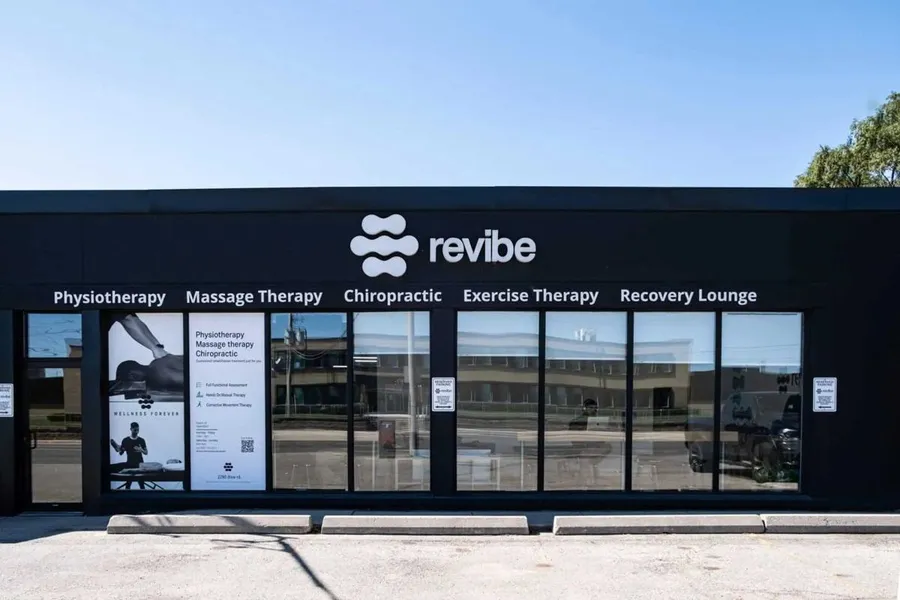
Pick your clinic. You book straight into Jane, our scheduling system, where you choose your practitioner and time.
 Mississauga 2290 Dixie Rd (289) 806-5123 Your clinic
 Markham 220 Torbay Rd (905) 783-8423 Your clinic
Not sure what to book? Take the Care Map or call Mississauga or Markham.

Tell us what you need and the team will call you back to book the right session.
Prefer to book yourself?
7 questions that reveal which areas of your body are ready to perform, which need attention, and exactly which tools can help you get back to feeling like yourself.
Tap a circle to learn more.
The best way to start improving these areas is with a first session where we review your Care Map and begin reducing the stress on your body.
Want to save these results? and we'll include a downloadable copy.
Tell us a bit about yourself and we'll have a clinician review your Care Map results before your first session.
The Revibe team will be in touch shortly. Your personalized Care Map summary is below, save or print it for later.
Your Care Map report is below
Care Map results
Your progress will not be saved.
The Care Map is how we understand your body clearly and completely. Instead of chasing symptoms, we look at what is limiting you right now and build a plan around it.
What it gives you
What your body can handle today. Some days you are ready to push, other days you need support first.
You may feel this if
Revibe tools that help
How well your body recharges. Effort only becomes progress when recovery happens.
You may feel this if
Revibe tools that help
How much stress your body is under: training, work, sleep and mental load. The goal is managing demand, not doing more.
You may feel this if
Revibe tools that help
What is happening inside your body. Internal systems drive healing, energy and adaptation.
You may feel this if
Revibe tools that help
What your body can sustain long term. Can it handle repeated effort without breaking down?
You may feel this if
Revibe tools that help
How you respond to pressure. Confidence and clarity shape consistency.
You may feel this if
Revibe tools that help