

Care Map results
Your 3 focus areas
Recommended tools
Your main concern or goal
Ready to get started?
- Mississauga: (289) 806-5123
- Markham: (905) 783-8423
- revibeto.com
Follow us
- Instagram: @timetorevibe
- Facebook: Revibe
- LinkedIn: Revibe
Restore Joint Function and Reduce Pain Naturally
Living with chronic back pain, neck tension, or limited mobility? You're not alone. Thousands of patients across Mississauga and Markham find relief through spinal adjustments—a proven, non-invasive treatment that restores joint function and reduces pain naturally. At Revibe, our licensed chiropractors combine advanced techniques with personalized care to help you move better and feel better.
Whether you're dealing with work-related strain, sports injuries, or age-related stiffness, spinal adjustments offer a safe, effective path to recovery without medication or surgery.
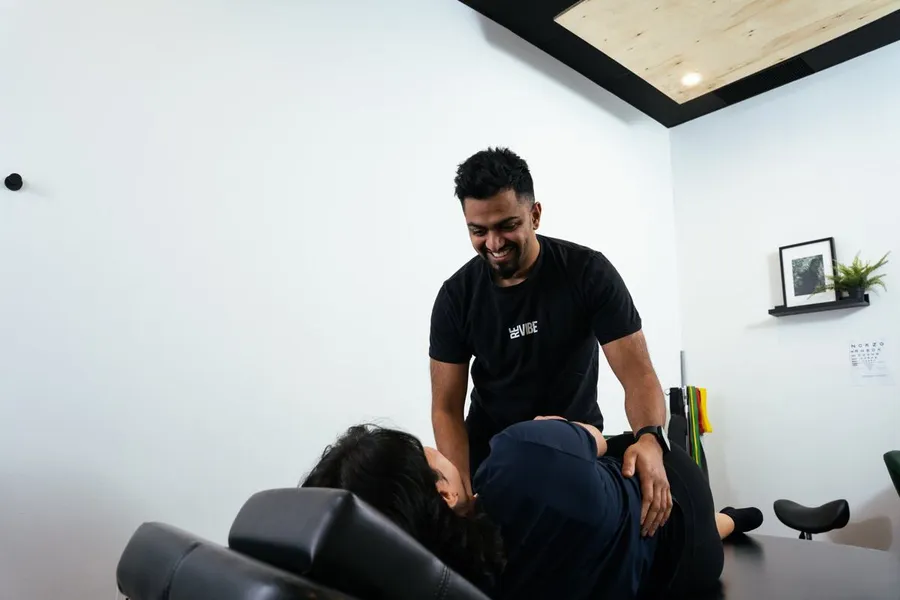
Spinal adjustments involve controlled pressure applied to specific joints in the spine by licensed chiropractors. The procedure improves joint mobility, supports natural alignment, and influences surrounding muscles and connective tissue. Practitioners apply high-velocity, low-amplitude thrusts to individual vertebrae to restore movement in restricted segments.
Sessions begin with an assessment of posture, spinal movement, and areas showing restriction. The chiropractor selects appropriate treatment techniques and applies adjustments while maintaining patient comfort. Gas release within the joint may produce a popping sound, which is normal and not related to treatment effectiveness.
Adjustments reduce nerve irritation and improve movement in affected joints. Many patients report decreased headache frequency and improved musculoskeletal comfort after treatment. Recent studies show significant improvement in chronic pain conditions with consistent spinal manipulation therapy.
Restoring joint motion enhances range of motion in the spine and supports more fluid movement during daily activities or sports participation.
Our chiropractors at Revibe use spinal adjustments to address a wide range of conditions affecting your spine, joints, and overall mobility.
We treat acute and chronic low-back pain, upper back tightness and reduced movement, sciatica and nerve-related leg pain, postural strain from prolonged sitting, and sports-related spinal injuries.
Our chiropractors address chronic or acute neck pain, shoulder tightness and restricted motion, "text neck" from device use, and whiplash from motor vehicle accidents.
We provide relief for tension headaches originating from neck and shoulder tension, headaches caused by cervical spine dysfunction, and management support for migraine-related symptoms.
Spinal adjustments help with reduced spinal range of motion, stiffness and limited daily movement, mobility limitations associated with aging, and biomechanical issues affecting athletic performance.
Technique selection depends on patient condition, movement findings, body structure, and treatment goals. Our chiropractors are trained in multiple approaches to provide the most effective care for your specific needs.
A high-velocity, low-amplitude manual thrust applied to targeted spinal segments. This technique commonly produces audible cavitation and aims to restore specific joint motion.
A method based on detailed biomechanical analysis and precise adjustments to individual vertebrae. Practitioners focus on specificity and directional accuracy.
A drop-table system that reduces force demands during spinal adjustments. Suitable for patients who prefer a gentler mechanical approach.
A handheld instrument delivers controlled, low-force impulses to individual joints. Often selected for those who prefer non-manual adjustments or require lower-force treatment.
Adjustments reduce nerve irritation and improve movement in affected joints. Many patients report decreased headache frequency and improved musculoskeletal comfort after treatment. Recent studies show significant improvement in chronic pain conditions with consistent spinal manipulation therapy.
Restoring joint motion enhances range of motion in the spine and supports more fluid movement during daily activities or sports participation.
Regular adjustments help correct postural strain from sitting, repetitive movements, and previous injuries. Improved alignment decreases load on supporting soft tissues, particularly important for office workers and those with desk-based careers.
When joint motion improves, surrounding muscles operate with less compensatory tension. This often reduces fatigue and enhances muscle coordination during both daily tasks and athletic performance.
Your initial appointment includes a comprehensive evaluation of posture and gait analysis, joint range of motion testing, neurological and orthopedic findings, palpation of spinal segments and soft tissue, and health history and symptom pattern review. The first adjustment may occur at this appointment if appropriate. We'll also discuss your treatment plan and answer any questions.
The chiropractor applies controlled pressure to targeted joints using manual or instrument-assisted methods. Many patients notice improvement immediately after treatment.
Patients receive customized stretching and mobility exercises, strengthening activities, postural guidance for work and daily life, and temporary activity modifications when needed. Explore our rehabilitation exercises and ergonomic advice resources.
Serious complications from spinal manipulation are rare. Our chiropractors assess patients before treatment to check for risk factors or contraindications.
Office Workers: Common challenges include neck and shoulder tension, lower back discomfort, and postural strain from computer use.
Athletes and Active Individuals: Spinal manipulation supports joint mobility, biomechanical function, and recovery after training-related stress.
Adults with Chronic Pain: Research supports spinal manipulation as an effective management approach for chronic spine-related pain and headaches.
Seniors: Gentle adjustments help maintain mobility and functional independence.
Preventive Care: Some individuals choose periodic treatment to maintain movement quality even without active symptoms.
Initial assessments include full spinal examination and first treatment. Follow-up sessions focus on progress evaluation and ongoing adjustments.
Many extended health insurance plans in Ontario include chiropractic benefits and may cover part or all of the appointment cost. We provide detailed receipts for insurance claims and accept most major providers. Direct billing available for select insurers.
Acute injuries: Often 3–6 visits over 2–3 weeks
Chronic problems: Frequently 8–12 visits or more, depending on response
Maintenance: Monthly or bi-monthly appointments to sustain results
The number of visits depends on the condition, severity, and treatment goals. Many patients begin noticing changes within the first few sessions.
Most patients feel pressure and movement but not sharp pain. Mild post-treatment soreness may occur for 24–48 hours.
Yes. Spinal manipulation is often used alongside physiotherapy, massage therapy, exercise therapy, and other conservative treatments for optimal results.
Hydration, light movement, and recommended stretches may assist short-term recovery. Strenuous activity can be limited if soreness is present.
Certain medical conditions require modified techniques or alternative approaches, which the chiropractor screens for during assessment.
Relief duration varies by condition, injury history, and lifestyle. Benefits accumulate with consistent treatment.
Yes. Chiropractors adjust techniques and positioning to ensure comfort and suitability during pregnancy.
No. A medical referral is not required to see a chiropractor in Ontario.
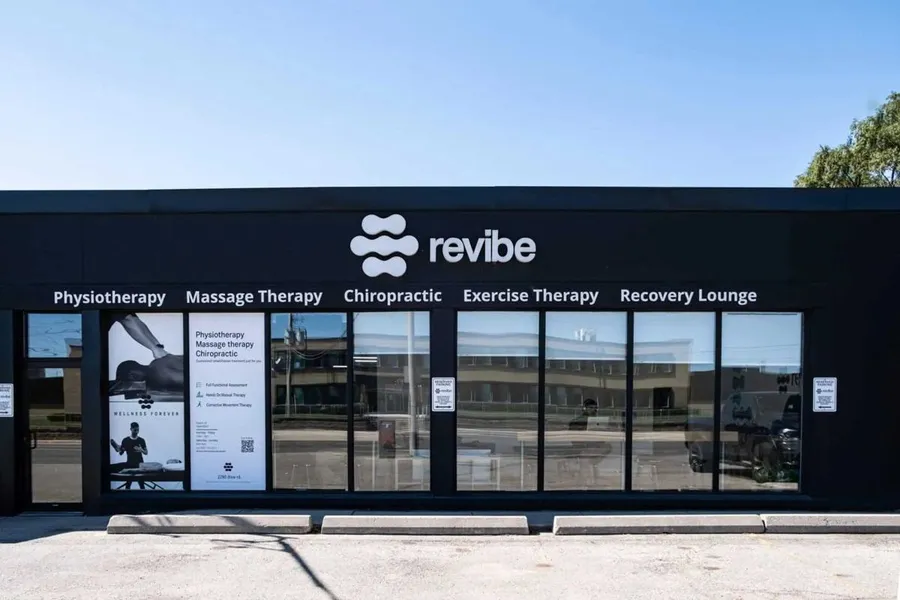
Pick your clinic. You book straight into Jane, our scheduling system, where you choose your practitioner and time.
 Mississauga 2290 Dixie Rd (289) 806-5123 Your clinic
 Markham 220 Torbay Rd (905) 783-8423 Your clinic
Not sure what to book? Take the Care Map or call Mississauga or Markham.

Tell us what you need and the team will call you back to book the right session.
Prefer to book yourself?
7 questions that reveal which areas of your body are ready to perform, which need attention, and exactly which tools can help you get back to feeling like yourself.
Tap a circle to learn more.
The best way to start improving these areas is with a first session where we review your Care Map and begin reducing the stress on your body.
Want to save these results? and we'll include a downloadable copy.
Tell us a bit about yourself and we'll have a clinician review your Care Map results before your first session.
The Revibe team will be in touch shortly. Your personalized Care Map summary is below, save or print it for later.
Your Care Map report is below
Care Map results
Your progress will not be saved.
The Care Map is how we understand your body clearly and completely. Instead of chasing symptoms, we look at what is limiting you right now and build a plan around it.
What it gives you
What your body can handle today. Some days you are ready to push, other days you need support first.
You may feel this if
Revibe tools that help
How well your body recharges. Effort only becomes progress when recovery happens.
You may feel this if
Revibe tools that help
How much stress your body is under: training, work, sleep and mental load. The goal is managing demand, not doing more.
You may feel this if
Revibe tools that help
What is happening inside your body. Internal systems drive healing, energy and adaptation.
You may feel this if
Revibe tools that help
What your body can sustain long term. Can it handle repeated effort without breaking down?
You may feel this if
Revibe tools that help
How you respond to pressure. Confidence and clarity shape consistency.
You may feel this if
Revibe tools that help